
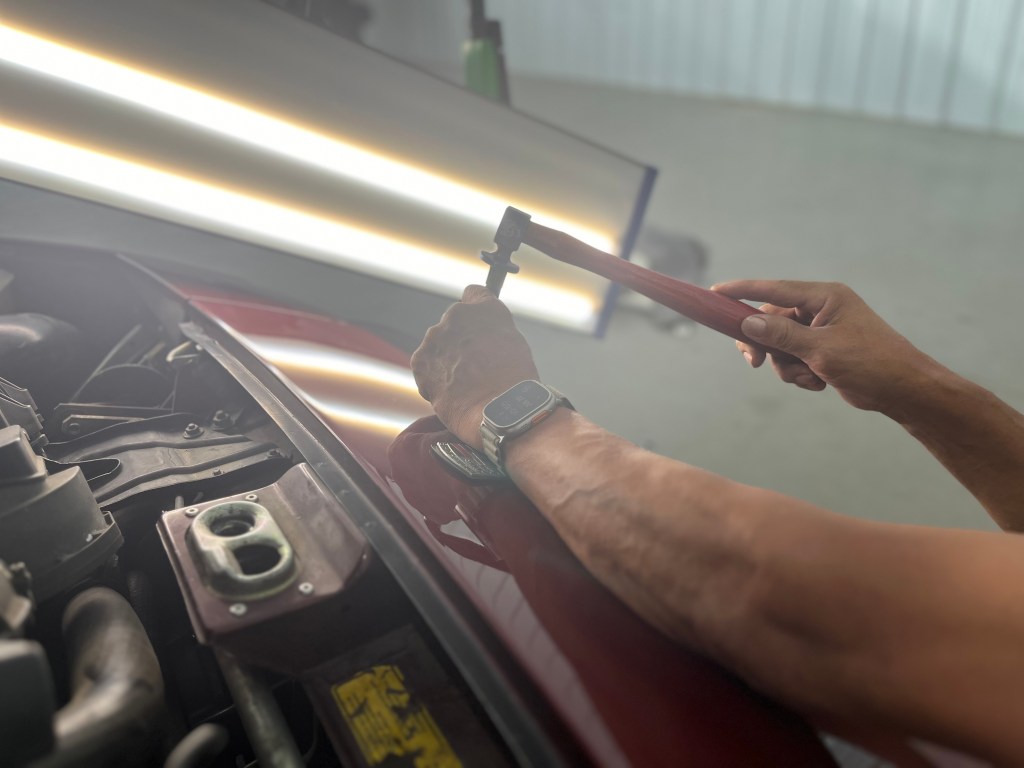
If your vehicle has suffered hail damage, you might be wondering what the best repair option is. Paintless Dent Repair (PDR) is an innovative method that removes dents without affecting the original paint job. Here are twelve compelling reasons why choosing PDR is a smart move for repairing hail damage.
1. Saves Time
Unlike traditional repairs, PDR is a quick process that can often be completed in just a few hours. This is because it avoids the need for extensive bodywork and repainting, which can be very time-consuming. In many cases, a technician only needs access to the panels from behind the dent, allowing them to use specialized tools to push the dent out quickly and efficiently. This means you spend less time without your vehicle, allowing you to get back to your daily routine sooner. For a more detailed explanation of how this works, you can check out Dent Heads’ blog on PDR.
Time is often of the essence when dealing with vehicle repairs, especially after a hailstorm. No one wants to wait days or even weeks for their car to be fixed. The quick turnaround time of PDR is a significant advantage, as most repairs can be done within a day. This is particularly beneficial for those who rely heavily on their vehicle for daily commutes or business purposes. For an overview of how swiftly this process can be carried out, learn more about our quick service process.
2. Cost-Effective
Because it doesn’t require new paint or extensive labor, PDR tends to be less expensive than conventional methods. Traditional auto body repair methods involve sanding, filling, and repainting the damaged area, which can be quite costly. In contrast, PDR involves fewer resources and less labor, which translates to lower costs for the customer. According to Minnesota Dent Company, this cost-effective nature makes it a widely chosen option for hail damage repair.
Aside from the immediate repair costs, PDR can also save you money in the long run by avoiding expenses associated with paint mismatch and related issues. Because no paint is needed, there’s no risk of color variations, which can be costly and time-consuming to fix. Moreover, traditional repairs often decrease the resale value of your car due to visible touch-ups. PDR eliminates these concerns and preserves the vehicle’s value, making it a financially sound choice.
3. Maintains Original Paint
Preserving the original paint job helps keep your vehicle looking factory-fresh and can maintain its resale value. When you opt for paintless dent repair, you avoid the complications of paint matching and the potential inconsistencies that come with repainting. The original paint remains intact, ensuring that the vehicle looks as good as new without any signs of previous damage.
Maintaining the original paint is crucial for luxury and classic cars, where any deviation from the factory finish can significantly impact the vehicle’s value and aesthetic appeal. Keeping the original paint also means that the sheen and texture of the paint remain even across the entire vehicle, something that can be hard to achieve with spot repaints.
4. Environmentally Friendly
PDR eliminates the need for chemical paints and fillers, making it a greener option. Traditional auto body repair processes often involve the use of toxic chemicals and materials that can be harmful to the environment. By opting for PDR, you reduce your carbon footprint and support more sustainable repair practices. According to the Benefits of PDR by Minnetonka Collision, PDR’s eco-friendly nature is one of its standout advantages.
Choosing PDR means you’re not only caring for your car but also for the environment. Traditional repairs generate waste materials like sanding dust, paint over-spray, and used filters, which require proper disposal to avoid environmental contamination. PDR, on the other hand, involves minimal waste and uses fewer resources, making it a much more sustainable choice.
5. Retains Vehicle Value
Because PDR preserves your original paintwork and integrity, your vehicle retains its value better. The original paint job remains untouched, which is crucial for maintaining the car’s market value. Vehicles that have undergone traditional dent repair with repainting often suffer from depreciation due to the noticeable repair work. Paintless Dent Repair provides a seamless finish that makes the dents virtually undetectable.
The retained value is especially important if you’re planning to sell or trade in your vehicle in the future. A car that has been repaired using PDR is more likely to fetch a higher price than one that has been subjected to conventional repair methods. The undetectable nature of PDR repairs ensures that potential buyers will not be put off by visible signs of damage, thus boosting your car’s resale value.
6. Non-Invasive
This method doesn’t require drilling or sanding, keeping the structural integrity of your car intact. Traditional methods often involve sanding down the damaged area, filling it with body filler, and then repainting. These steps can compromise the structural integrity of your vehicle. With PDR, the technician uses specialized tools to massage the dent out from the inside, leaving the original structure and paintwork unscathed. This means you won’t have to worry about weakened panels or potential issues down the line, making PDR a more reliable and durable solution for dent repair.
Additionally, PDR prevents the proliferation of rust and corrosion, which can occur when traditional methods are used. Sanding and drilling expose the metal underneath the paint, making it susceptible to the elements. By opting for a non-invasive method like PDR, you protect your car from these long-term risks.
7. Ideal for Minor Dents
Perfect for addressing small to medium-sized dents without opting for extensive bodywork. Whether your car has been caught in a hailstorm or sustained a minor ding in a parking lot, PDR provides a quick and efficient solution. The method is particularly effective for shallow dents where the paint remains intact.
By focusing on minor dents, PDR offers a targeted repair without the need for broader, more invasive procedures. This is especially useful for lease returns, where maintaining the vehicle’s appearance can help you avoid costly penalties. The precision of PDR ensures that each small dent is addressed meticulously, restoring the car’s exterior to its original condition.
8. Wide Range of Services
PDR can handle everything from door dings to larger hail damage areas effectively. Technicians use a variety of tools and techniques to get behind the panel and push the dent out, making it incredibly versatile. This wide range of applicability means you can rely on PDR for various types of damage, knowing that the repairs will be done effectively and efficiently.
In addition to being suitable for different sizes of dents, PDR is also adaptable to various surfaces, including aluminum and high-strength steels. This flexibility allows for consistent repair quality across different sections and types of vehicles, ensuring a seamless and professional outcome every time. For more information about our comprehensive services, click here.
9. Insurance Friendly
Most insurance companies cover PDR, making the process smoother and less stressful for you. Being insurance-friendly means that PDR is often recommended by insurance providers for its efficiency and cost-effectiveness. The simplicity of the process also ensures quicker claim approvals and faster payouts, allowing you to get back on the road without unnecessary delays.
Working with your insurance for PDR claims is usually straightforward. Most insurance companies recognize the value and benefits of paintless dent repair and will approve it as a preferred method for dent removal. This means you’re not only getting a superior repair but also experiencing a hassle-free claims process. For more information on how DentLab can assist with insurance claims, visit our website.
10. Less Labor Intensive
It requires fewer steps and less manual labor, which helps keep costs lower. PDR eliminates the need for labor-intensive processes like sanding, filling, and repainting. This streamlined approach not only speeds up the repair time but also reduces labor costs, making it a more economical choice for both the repair shop and the customer.
Because it’s less labor-intensive, PDR allows technicians to focus on multiple vehicles simultaneously, improving overall efficiency. This means that repair shops can offer quicker turnaround times to their customers without compromising on the quality of the work. Therefore, PDR is not only cost-effective but also time-efficient, making it a winning solution for dent repair.
11. No Risk of Paint Mismatch
Since no paint is used, there’s no risk of mismatched colors or ugly paint variations. One of the biggest concerns with traditional dent repair is the potential for paint mismatch. Even with the best color-matching technology, there’s always a risk that the new paint won’t perfectly match the old, leading to visible discrepancies.
By avoiding the use of paint altogether, PDR ensures a uniform appearance across your entire vehicle. This is particularly crucial for maintaining the aesthetic appeal and resale value of your car, as any discrepancies in the paint job can be a major drawback. For advice on how to ensure your vehicle remains in pristine condition, visit our Quick Start Guide.
12. Highly Effective
PDR is a reliable, effective method for removing dents and restoring your vehicle’s appearance. The process involves using specialized tools to gently massage the metal back into its original shape, effectively eliminating dents without affecting the paint. This method is not only highly effective but also incredibly precise, ensuring that the dent is completely removed and the vehicle looks as good as new.
The effectiveness of PDR has been proven time and time again, making it a trusted choice for many vehicle owners. Its ability to address a wide range of dent sizes and types, from minor door dings to larger hail damage areas, underscores its versatility and reliability. For more extensive information on the effectiveness of PDR, you can refer to the Benefits of PDR by Collision Craftsman.
 DentLab
Leave a comment